
Oak Flooring NZ: Pick an Oak Floor That Suits Your Home for Years
Choose the colour family first, the grain second and the product last. That is the whole answer to picking oak flooring, and it is the answer Hana reached only after she had done it the other way round.
Picture Hana on a Saturday morning in her villa on the North Shore of Auckland. She has a tote bag full of oak samples on the bench, a cold coffee beside them, and a partner who has quietly stopped offering opinions. Every board in the bag looked perfect in the showroom. At home, under her own windows, half of them looked like somebody else's floor.
The problem was not that the samples were bad. The problem was that she had fallen for individual boards. One had a lovely brushed surface. Another had a knot pattern she adored. A third had a name she liked. None of those reasons told her whether the floor would sit comfortably beside her painted skirting, her grey sofa and the honey coloured rimu door she had spent a summer stripping back.
So she did what most people do. She laid the boards on the hallway floor, walked past them for a week, and got more confused. Her sister liked the pale one. Her partner liked the dark one. The dog lay on whichever one was in the sun.
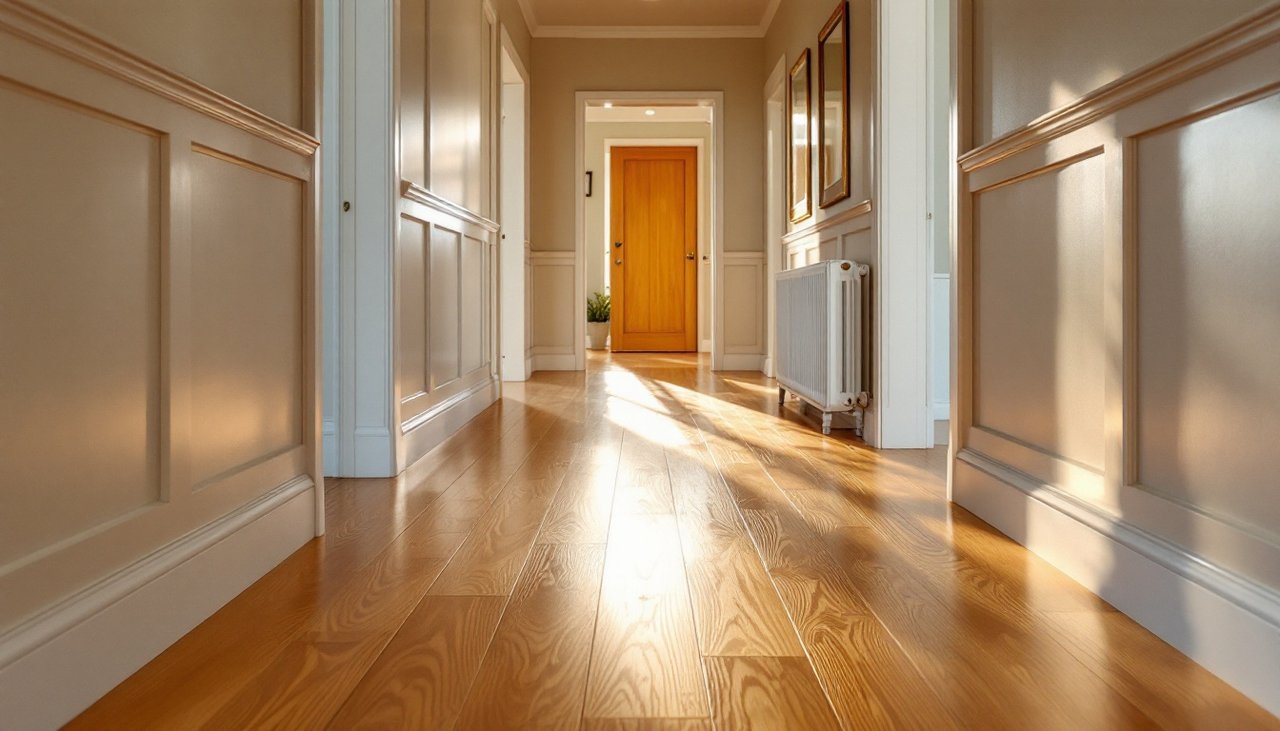
The turn came when she stopped asking which board was best and started asking which family of oak her house already belonged to. The rimu door was warm. The walls were a soft white. The light came in low and golden in the afternoon. Once she saw that, most of the tote bag went back in the car, and the decision that had dragged on for weeks took one evening.
The rest of this guide follows the same order Hana ended up using, with the oak colours that Power Dekor actually has in stock sitting under each family. If you already know your family and want to see boards in person, call the Rosedale showroom on +64 9 444 8288 before the weekend; some of the premium laminate colours are clearance lines, and once a colour sells through it is gone for good.
The Sample Board That Looked Wrong at Home
Showroom lighting is even and bright. Your lounge is not. A board that reads as creamy beige under shop lighting can turn pink at dusk in a south facing room, or go flat and grey under cool LED downlights. That is why Hana's first round of samples failed: she judged them in the wrong light.
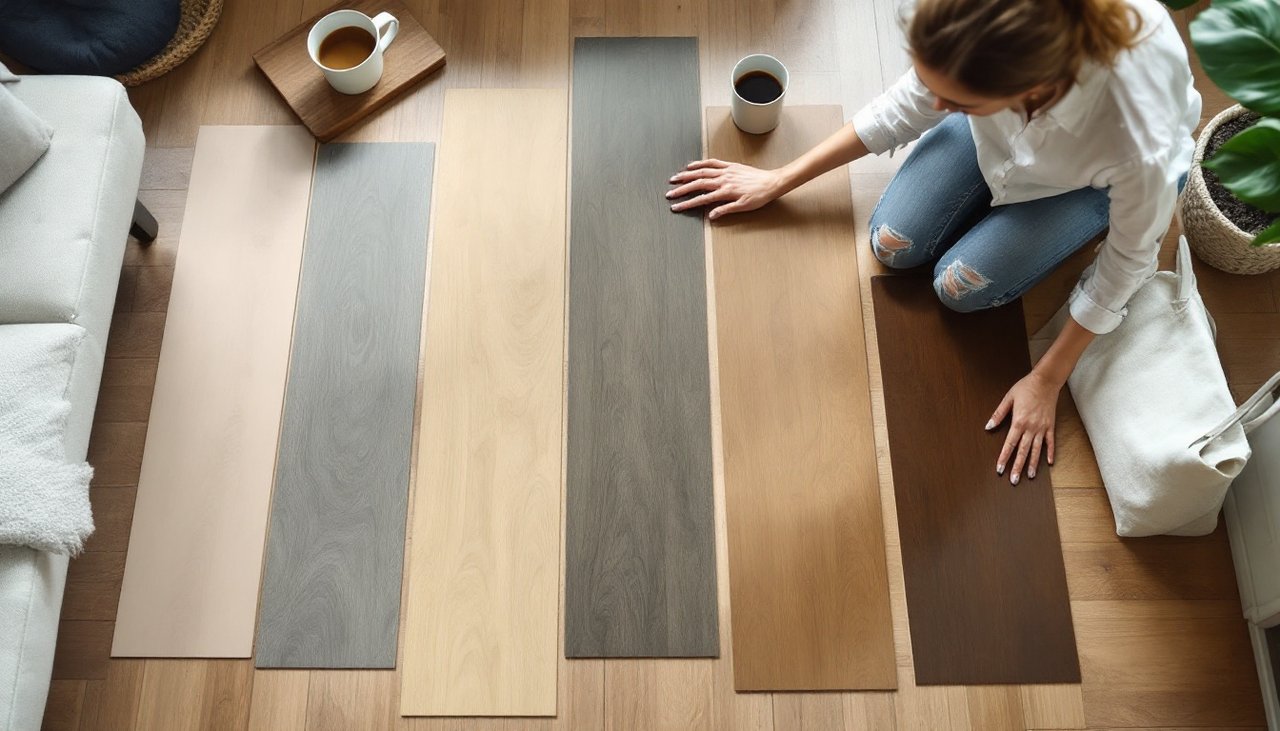
The fix is simple and costs nothing. Take the samples home, put them flat on the floor where they will actually live, and look at them morning, afternoon and night. Put them next to the fixed things you are not changing, such as a kitchen benchtop, a timber door, a tiled entry or a carpet in the next room. Oak flooring has to agree with those, not with the showroom.
How much light a room gets and whether it suits a pale or dark floor is its own question, and we have written about it separately in our guide to light vs dark flooring in NZ. This guide assumes you have a rough sense of that and moves on to the oak itself.
What Hana Learned About Oak Grain
Oak is popular for a reason. Its grain is open and readable, with long straight lines, cathedral arches and the occasional knot, so it looks like timber from across the room without shouting about it. Within that, there are two broad grain personalities, and working out which one you want saves a lot of back and forth.
A clean grain has soft, even lines and small or few knots. It feels calm and modern, suits open plan living, and hides the fact that boards repeat. Amber Grain Oak in the AquaREPEL range is a good example: its product description calls out subtle knots and a consistent colour, which is exactly what you want if you like oak but not a rustic cabin feel.
A character grain has visible knots, streaks and colour variation from board to board. It suits villas, bungalows and farmhouse style kitchens, and it is forgiving with wear because a scuff reads as part of the pattern. Patis Rustic Oak and Vintage Oak sit in this camp, as does Shadow Oak in the premium laminate range, which its product page describes as grey brown with lighter cream highlights and natural knots.
Hana's villa had character already, so she leaned towards visible grain. Someone in a new build townhouse with flat white walls would probably go the other way. Neither is right in general; one is right for the house.
There is also the question of what the oak look is made from. Every board mentioned below as AquaREPEL or premium laminate is a laminate with a printed and embossed oak surface. If you want real oak on top, Power Dekor's engineered hardwood flooring range carries a genuine oak wear layer over a stable core; the product pages there list the specifications, and the team can walk you through it in the showroom.
Where the Pale and Cream Oaks Won Her Over
Hana started convinced she wanted pale. Pale oak makes rooms feel bigger, it pairs with almost any furniture, and it shows dust less than you would expect. What surprised her was how many different pales there are.
Cream and blonde oaks lean warm. In the premium laminate range, Classic Cream Oak is described as beige cream with pale honey streaks and faint knots, a good fit for coastal or Scandinavian rooms. In the AquaREPEL range, Smooth Cream Oak, Oatmeal Oak and Ivory Grain Oak sit in the same soft, warm band, while Warm Sand Oak and Light Sand Oak take it slightly towards sand. Light Natural Oak and White Truffle Oak are worth laying beside those, because at home they can read noticeably different from each other.
In engineered boards, Oak Nature is the light natural oak option, with a 15mm board carrying a 3mm oak wear layer according to its specification sheet.
The best way to judge a pale oak is to lay it next to your skirting boards. If the floor makes the white paint look dirty or yellow, it is the wrong pale.
Hana liked the cream oaks, but next to her rimu door they looked a little washed out. That pushed her to look at the grey family, which she had written off.
Why the Grey Oaks Nearly Changed Her Mind
Grey and greige oaks are cooler. They suit homes with charcoal joinery, concrete benchtops, black window frames and cooler white walls, and they are very forgiving of the grey dust that settles in every Auckland house near a busy road.
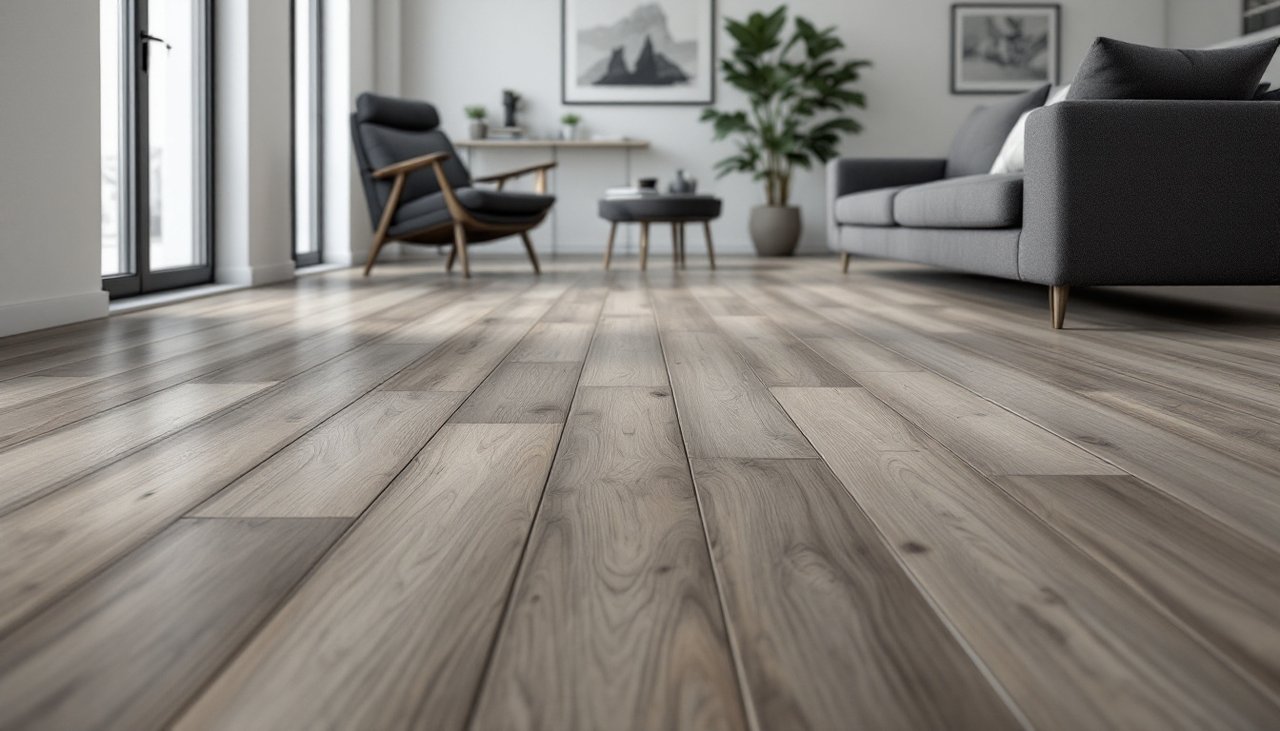
Greige Natural Oak is a middle ground between warm and cool, and it is the one to try first if you cannot decide. Grey Natural Oak, Frosted Ash Oak, Silver Grey Oak and Silver Sand Oak push further into cool territory. In the premium laminate range, Elfland Oak is described as pale beige meeting light grey with wispy knots, and Marble Grey Oak is another option in the same family.
Hana's grey sofa loved these boards. Her rimu door did not. Warm timber beside a cool grey floor can look like two houses stitched together, and that was the moment she realised she was really choosing for the door and the afternoon light, not the sofa. Sofas get replaced; doors and light stay.
The Honey Oaks She Kept Coming Back To
This is where Hana landed. Honey and natural oaks carry warm golden and caramel tones that sit happily beside native timbers like rimu and kauri, brass or black hardware, and the green of indoor plants. They are the classic New Zealand villa and bungalow floor for a reason.
Amber Grain Oak is the clean grain honey option. Brushed Natural Oak and Natural Varnished Oak read as straightforward natural oak, while Classic Beige Oak and Soft Camel Oak are a notch softer. Sandstone Oak, Autumn Meadow Oak and the rustic Patis Oak and Vintage Oak bring more variation for rooms that can carry it. In engineered boards, Oak Yellowstone sits in this warmer family and is worth seeing in person if real oak is on your list.
Hana chose a honey oak with a gentle grain. Laid beside the door, it made the rimu look deliberate rather than leftover, and it turned the low afternoon light into something she looked forward to rather than something she had to work around.
When Darker Brown Oak Made Sense Next Door
Hana's neighbour was renovating at the same time and went the opposite way. They were doing up a modern plaster home they had bought in Hamilton, with big white walls, very little native timber and a lot of glass. A mid to dark brown oak gave that house weight and warmth it simply did not have.
Mid browns include Pale Brown Oak and Dusk Oak, which are good starting points if you want warmth without going truly dark. Cocoa Oak, Dark Rum Oak, Woodbark Oak and English Walnut Oak go deeper. Shadow Oak in the premium laminate range mixes dark grey and brown for a moodier look. In engineered boards, Oak Mocha is the coffee coloured choice, with a 15mm board and 4mm wear layer listed on its specification sheet, and Oak Espresso goes darker still.
Dark floors are beautiful but honest about dust, pet hair and grit. If you live on a gravel driveway or have a pale haired dog, lay a dark sample by the back door for a week before you commit.
What Held Up After the Kids and the Dog
Colour is the fun part. Durability is the part that decides whether you still like the floor after a few winters of school shoes and a dog skidding round the corner to the door.

For laminate, the number to look for is the AC abrasion rating. The AquaREPEL oak boards are 12mm HDF laminate rated AC4, which the product specifications describe as suitable for heavy residential and general commercial use, and they carry a 35 year factory structural warranty. That rating is about the wear layer resisting scratches and scuffs from daily traffic; it is not a promise that nothing will ever mark it, so felt pads under chairs are still worth the few dollars.
For engineered oak, what matters is the thickness of the real oak wear layer and the finish on top. The engineered oak boards list their wear layer on each product page, and they come with a 30 year factory structural warranty.
For both, the subfloor matters as much as the board. On a concrete slab, moisture coming up from below is the most common reason a floor lifts or gaps. The team will check this at measure, and the Building Code guidance on moisture is a useful read if you want the background.
Hana's biggest worry was the dog. In practice, the grain helped more than the rating: a honey oak with visible grain hides claw marks far better than a very smooth pale or very dark board.
How the Care Routine Turned Out Simpler Than She Feared
Oak floors, whether laminate or engineered, do not want much. Hana's routine settled into this:
- Vacuum or dry mop grit a few times a week, because grit under shoes is what dulls a finish.
- Wipe spills straight away with a damp, well wrung cloth rather than a wet mop.
- Put felt pads under chairs and a mat at every outside door.
- Use a cleaner made for laminate or finished timber floors, never steam, wax or oil soap.
That is genuinely it. Engineered oak has the extra option of being refinished later in its life, depending on the wear layer, while laminate is designed to stay as it is and be replaced board by board if something goes badly wrong.
What We Would Tell Anyone Starting Where Hana Started
If you are standing where Hana stood, with a bag of samples and no decision, the shortcut is the same order she ended up with. Look at the fixed things in the house and decide whether it is warm, cool or in between. Pick the matching oak family. Then choose between clean grain and character grain. Only then compare individual boards, and do it at home, in your own light, over a few days.
It is also worth being quick once you know. Several of the premium laminate oak colours are clearance lines with limited stock left, and when a colour sells through it does not come back. Booking a measure now is the surest way to make sure the colour you picked is still on the shelf when your floor goes down.
Book your free measure and quote with our Auckland team or call +64 9 444 8288. The Rosedale showroom at Unit 6/63 Arrenway Drive is open Monday to Friday 10:30am to 4pm and Saturday 11am to 4pm, and you can take samples home the same day.
Questions People Ask About Oak Flooring in NZ
Is oak laminate flooring a good choice for NZ family homes?
Yes, for most family homes it is a practical choice. The AquaREPEL oak laminates are AC4 rated for heavy residential use and carry a 35 year structural warranty. A visible grain also hides everyday scuffs better than a very smooth finish.
How do I choose between warm, grey and dark oak colours?
Start with what is not changing in the house, such as timber doors, benchtops and the direction of the light. Warm oaks suit native timber and golden light, grey oaks suit charcoal joinery and cool whites, and dark oaks add weight to bright modern spaces. Always judge samples at home over a few days.
What is the difference between clean grain and rustic oak?
Clean grain oak has even lines and few knots, so it feels calm and modern. Rustic or character oak has more knots and colour variation from board to board, which suits villas and bungalows and hides wear well.
Can I see Power Dekor oak flooring before I buy?
Yes. The Rosedale showroom in Auckland has the oak ranges on display and you can take samples home. The team also offers a free measure and quote.