
Laminate Flooring Maintenance NZ: The Practical Care Checklist

Laminate maintenance is not a hunt for the strongest cleaner. It is a routine for keeping abrasive grit and unnecessary moisture away from joints while protecting the surface from concentrated loads. Most tasks are simple. The expensive mistakes usually begin when someone floods the floor, uses an unapproved steam cleaner, drags furniture, or treats a plumbing leak as a cleaning job.
The exact care guide for the installed product always wins over generic advice. Laminate ranges differ in construction, joint treatment, permitted cleaners and warranty conditions. Use this checklist to organise the work, then replace every general instruction with the current product-specific requirement where it is more precise.
Checking upkeep before choosing a floor? Browse Premium Laminate flooring and request the current care and installation documents for the exact range on your shortlist.
Setup checklist: create the maintenance system once
Good care becomes much easier when the right tools are already available. Store the manufacturer's current care instructions with the invoice and product details. Record the range, colour and batch information if provided. Keep any recommended spare boards flat and dry in a suitable location, because a future replacement may be difficult if the profile changes.
- Obtain the exact care, installation and warranty documents.
- Use a vacuum head approved for hard floors, with no exposed metal or aggressive rotating action.
- Choose a well-wrung microfibre mop only if the care guide allows it.
- Use only permitted cleaning products and dilution rates.
- Place effective matting at exterior entries.
- Fit compatible protectors beneath furniture legs.
- Store a clean absorbent cloth where spills are likely.
Do not build the kit around online cleaning recipes. Vinegar, oils, waxes, abrasive powders, polish and general-purpose disinfectants can leave residue, dull a surface or conflict with product instructions. “Natural” does not mean compatible. The same applies to rubber-backed mats, adhesive pads and castor cups: check that their materials will not stain or react with the flooring.
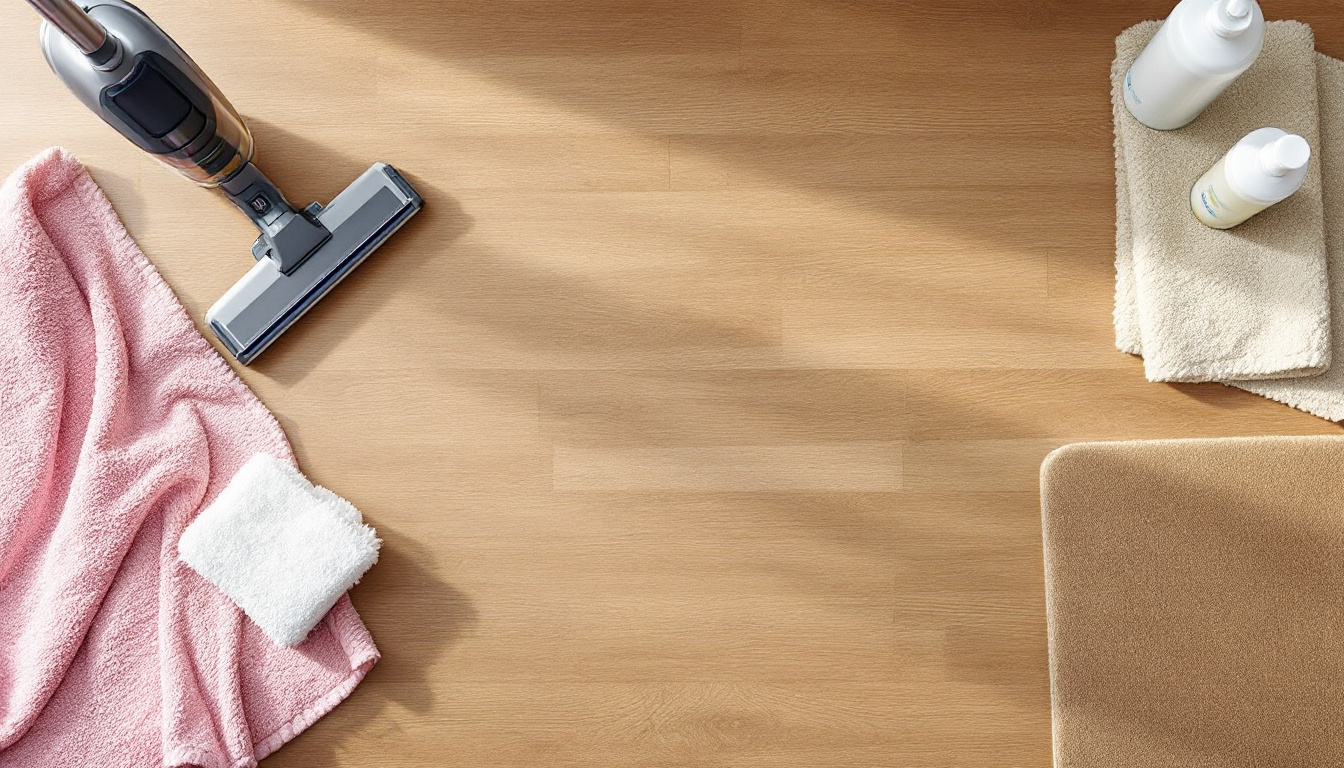
Event checklist: act immediately when something happens
For an ordinary spill
- Stop the source.
- Blot or lift the liquid rather than spreading it across more joints.
- Clean the residue using the approved method.
- Dry the surface and inspect nearby joints and edges.
- If water may have travelled underneath, seek advice promptly.
A product may carry a time-limited spill-resistance claim, but that is not a recommended waiting period. Prompt cleanup is still the lowest-risk response. A visible surface can appear dry while moisture remains beneath a floating floor, around a pipe or under an appliance.
For tracked-in grit or soil
Remove loose grit before wiping. Sand and small stones can act like abrasive particles under shoes, chairs and cleaning tools. If soil is damp, lift the bulk gently, allow the area to settle, then clean according to the care guide. Rubbing a muddy patch immediately can spread grit and increase marking.
For an impact, chip or deep mark
Do not disguise damage with a random filler, marker or coating before identifying the product and repair method. Photograph the area, note what happened and contact the supplier or installer. A cosmetic treatment that looks acceptable today may prevent a better repair or affect a later assessment.
Weekly checklist: remove grit without flooding the floor
The weekly rhythm should begin dry. Vacuum or sweep with equipment suited to hard flooring, paying attention to entrances, kitchen work zones and places where chairs move. Check the vacuum head for trapped stones before it crosses the room. A dirty tool can create the very marks it is meant to prevent.
Damp cleaning should use the minimum moisture permitted by the product instructions. A mop should not leave puddles, wet joints or a trail that takes a long time to dry. Spray should not be directed into plank edges. If the floor looks streaky, adding more cleaner is usually not the intelligent first move; excess product may be leaving residue.
Clean along the room in manageable sections and maintain ventilation. Replace dirty water or cloths rather than moving grit around. Never assume steam is acceptable. Heat and moisture can reach joints and edges, and many flooring care instructions exclude steam cleaning unless a specific product says otherwise.
Monthly checklist: inspect the protective details
Once a month, look beyond the open floor. Lift entrance mats and inspect for trapped moisture or abrasive debris. Check furniture pads for wear, grit and displacement. Examine the routes used by rolling chairs, dining seats and movable islands. Concentrated movement can reveal a problem before the rest of the room shows it.
- Lift and clean beneath mats without leaving moisture trapped.
- Replace worn or contaminated furniture protectors.
- Confirm chair castors or protective mats remain suitable.
- Inspect plumbing connections and appliance hoses near the floor.
- Look for raised edges, opened joints, unusual movement or persistent marks.
- Check that exterior doors and thresholds are keeping weather outside.
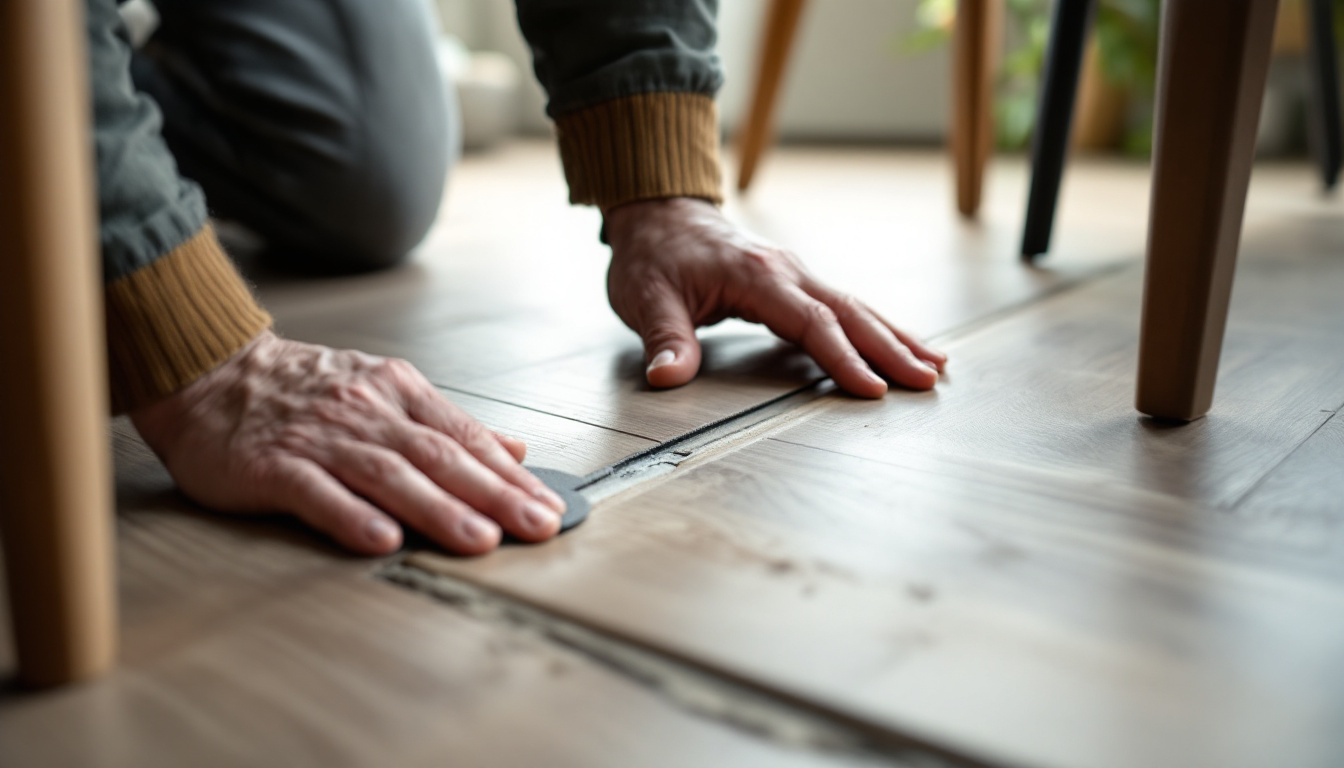
A raised edge or opening joint is not something to hammer, glue or seal casually. It may relate to moisture, movement, substrate condition, an obstruction or installation detail. Record the change and obtain advice before a small symptom becomes harder to diagnose.
Seasonal checklist: respond to the home, not the calendar
New Zealand homes can experience changing indoor humidity, stronger sunlight and wet winter entries. Laminate is installed with movement requirements defined by its system, so homeowners should not block perimeter spaces, fasten a floating floor through the surface or improvise sealants. If movement becomes visible, ask the installer to assess it.
During wetter periods, increase attention at doors and remove saturated mats. Resolve leaks, condensation and building moisture at their source. Surface cleaning cannot fix a damp substrate or defective threshold. After storms, inspect vulnerable entries even when no water is obvious in the middle of the room.
Strong direct sunlight may change the appearance of materials over time and can create uneven exposure beneath rugs and furniture. Use suitable blinds or curtains where needed and rotate loose furnishings when practical, following product guidance. Do not promise that any flooring colour will remain absolutely unchanged under all conditions.
Furniture checklist: prevent concentrated and moving loads
Lift furniture instead of dragging it. Use enough people or appropriate equipment so the load remains controlled. Protectors should be clean, correctly sized and compatible with the floor. A tiny pad beneath a heavy leg can concentrate force rather than distribute it.
Rolling office chairs require special attention because repeated movement can create a narrow wear zone. Confirm whether the castors and any protective mat suit the installed laminate. Keep the area free of grit. A chair mat with an unsuitable backing can create a different problem by trapping moisture or reacting with the surface.
When moving a refrigerator, washing machine or dishwasher, protect the route and follow safe handling requirements. Appliance feet and wheels can impose high point loads. After reconnection, inspect hoses and fittings rather than assuming the flooring will reveal a slow leak immediately.
Avoid checklist: seven shortcuts that create risk
- Do not flood the floor or pour cleaning water directly onto it.
- Do not use steam unless the exact care guide expressly permits it.
- Do not scrub with abrasive pads, powders or damaged tools.
- Do not apply wax, polish, oil or coating without product approval.
- Do not leave wet footwear, towels, plant pots or mats trapping moisture.
- Do not drag furniture or appliances.
- Do not hide a plumbing, threshold or substrate moisture problem with sealant.
These are general risk controls, not a substitute for the product contract. If an instruction conflicts with the manufacturer's current document, stop and clarify the correct method. A forum comment about another laminate range is not evidence for yours.
Major-water checklist: cleaning ends where investigation begins
An overflowing appliance, plumbing leak, storm entry or prolonged standing water is not an ordinary spill. Isolate the source safely, protect people from electrical or contamination hazards, document the event and contact the relevant professionals. Do not walk across a visibly unstable floor or assume surface drying resolves moisture underneath.
The correct response may involve lifting boards, testing the substrate, drying building elements or replacing affected material. That decision depends on the event, construction, product and installation. No generic blog can promise that water-damaged laminate will recover or that every affected board must be discarded.
Keep photographs, dates, product records and professional reports. If an insurance or warranty assessment is required, early documentation is more useful than a heavily altered area. Avoid unapproved repairs until responsibility and scope are understood.

Repair checklist: decide whether the issue is cosmetic, local or systemic
Begin with cause. A small surface mark, isolated impact and widespread raised joints are not the same problem. Ask whether moisture is active, whether movement continues, and whether the substrate or perimeter is involved. Repairing appearance before stopping the cause wastes time and may conceal evidence.
Laminate is generally not sanded and refinished like a suitable timber wear layer. Local board replacement may be possible depending on product availability, installation method and access. It is not guaranteed to be invisible. Stored spare boards can improve the match, but age, light and production variation still matter.
Contact the original supplier or installer with the product details, photographs and event history. Follow their process before using fillers or dismantling the floor. Where the issue relates to a leak or building defect, involve the appropriate trade rather than asking flooring maintenance to solve a different system's failure.
The one-page maintenance rhythm
| Trigger | Core action | Escalate when |
|---|---|---|
| Spill or grit | Remove promptly using the approved method | Moisture may have entered joints or travelled below |
| Weekly | Dry-clean first, then use minimum permitted moisture | Streaking, swelling or unusual movement persists |
| Monthly | Inspect mats, pads, entries, appliances and joints | Edges rise, gaps open or moisture source appears |
| Seasonal | Manage wet entries, sunlight and indoor conditions | Building moisture or threshold defects are suspected |
| Damage | Document, identify cause and seek product-specific advice | The issue is deep, spreading, wet or structural |
The rhythm is deliberately simple: stop grit, minimise moisture, distribute loads, inspect details and escalate early. A complicated cleaning ritual does not compensate for a leaking hose, a wet substrate or the wrong chemical. The least dramatic maintenance is usually the most effective.
Frequently asked questions
What is the best way to clean laminate flooring in New Zealand?
Follow the exact product's care guide. Usually the safe sequence is to remove dry grit first, then use the approved cleaner and minimum permitted moisture with a suitable microfibre tool. Do not assume one method fits every laminate.
Can I mop laminate flooring with water?
Use only the method permitted by the manufacturer. Do not pour water onto the floor or leave puddles and wet joints. If damp mopping is allowed, the tool should be well wrung and the surface should dry promptly.
Can I use a steam mop on laminate?
Do not use steam unless the current care instructions for the exact product expressly permit it. Heat and moisture can reach joints and edges, and generic appliance claims do not override flooring requirements.
How often should laminate floors be cleaned?
Remove spills and abrasive debris immediately. Dry-clean as often as the household requires, with extra attention at entries and moving chairs. Damp-clean only as needed and according to the product instructions.
Can damaged laminate flooring be repaired?
Some local damage may allow cosmetic treatment or board replacement, depending on the product, installation and access. Identify and stop the cause first, then obtain product-specific advice before applying fillers or lifting boards.
Choose a floor with a care plan you will actually follow. Explore Premium Laminate flooring and request the exact maintenance documents before finalising your selection. Each colour has its own product page, such as Marble Grey Oak, and for kitchens and entries look at our AquaREPEL water-resistant laminate.