
Eco-Friendly Flooring NZ: A Practical Claims Checklist
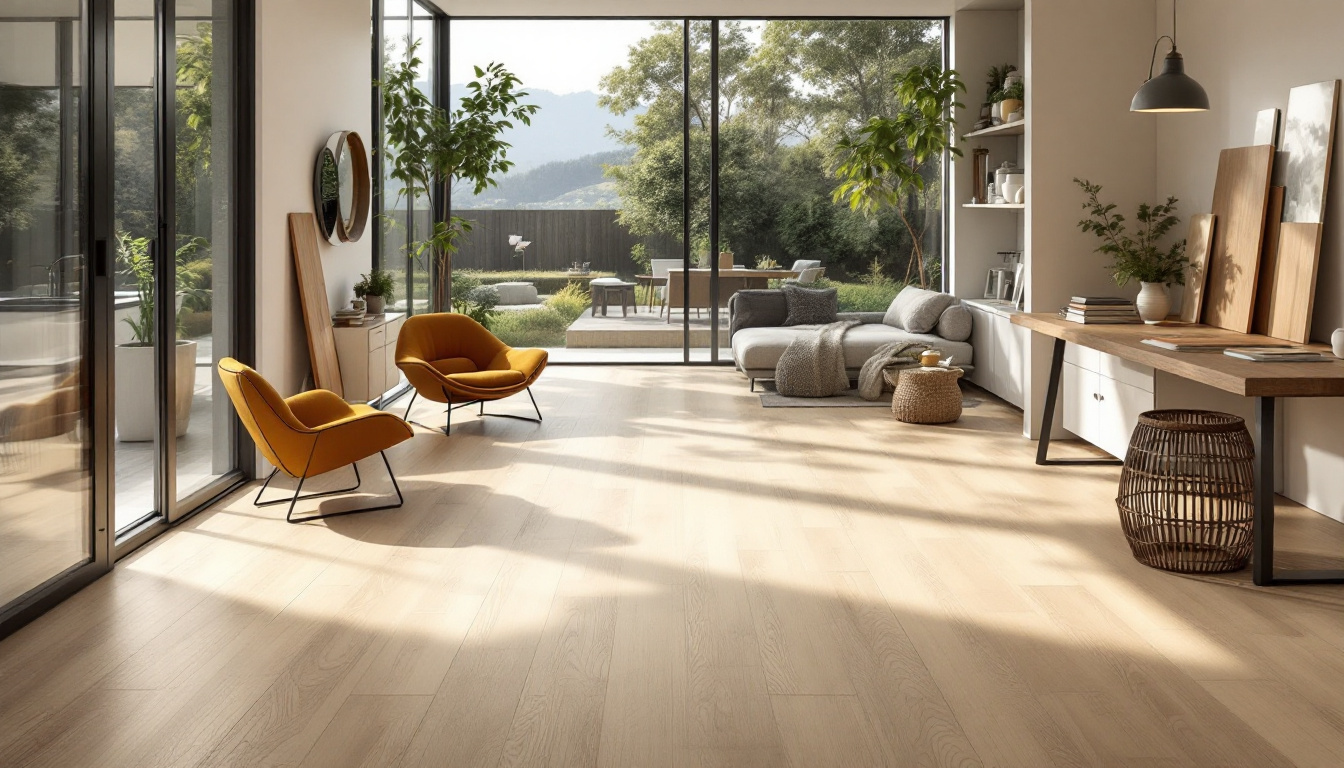
The most environmentally responsible floor is not automatically bamboo, timber, laminate or anything sold in a green box. It is a product whose sourcing, manufacturing, indoor emissions, service life, installation and eventual disposal can be supported with evidence. A floor that needs premature replacement can waste more material than a less fashionable option that performs for years.
For New Zealand buyers, “eco-friendly flooring” should therefore begin as a claims audit. Ask what the product is made from, where the timber or fibre came from, which emissions standard was tested, how the floor will be installed and whether it suits the actual room. If the answer is only “natural”, “green” or “sustainable”, the claim is not finished.
Want evidence behind the material choice? Read Power Dekor's sustainability approach, then request current product-specific sourcing, emissions, installation and care documents for the ranges you are considering.
Check 1: define the environmental result you want
“Better for the environment” can mean several different things: responsible forestry, recycled content, lower indoor emissions, less installation waste, long service life, repairability or a credible end-of-life route. One product may perform strongly in one area and weakly in another. Decide which impacts matter for the project before comparing labels.
A family replacing a failed floor in a dry living room may prioritise durability and indoor air quality. A renovation matching an existing timber floor may prioritise local repair rather than full replacement. A rental property may value a replaceable, hard-wearing surface that avoids frequent refits. These are different environmental decisions, even if all three buyers use the word sustainable.
Write the priorities down. A short brief might say: verified timber origin, current emissions evidence, suitability for the room, a realistic maintenance plan and a design we will keep. That sentence is more useful than asking a showroom for its greenest floor.
Check 2: trace the timber and fibre source
Timber flooring, engineered wood and wood-based laminate all depend on forestry and fibre supply. Ask whether the manufacturer can identify legal and responsible sources and whether any certification claim applies to the exact product or supply chain. A company-wide aspiration does not automatically certify every board.
Power Dekor's sustainability page states that the group works with legal timber sources and has invested in fast-growing plantation forestry and hardwood supply bases across several regions. That is a useful corporate position. A buyer comparing products should still ask for the current documentation attached to the selected range, because species, factory and product composition can differ.
Recycled or recovered wood content can reduce demand for virgin material, but percentages and definitions matter. Pre-consumer factory offcuts are different from post-consumer recovered material. Neither claim excuses poor durability or uncertain chemical content. Record the percentage, source and verification method rather than accepting the word recycled on its own.
Check 3: separate renewable material from complete product impact
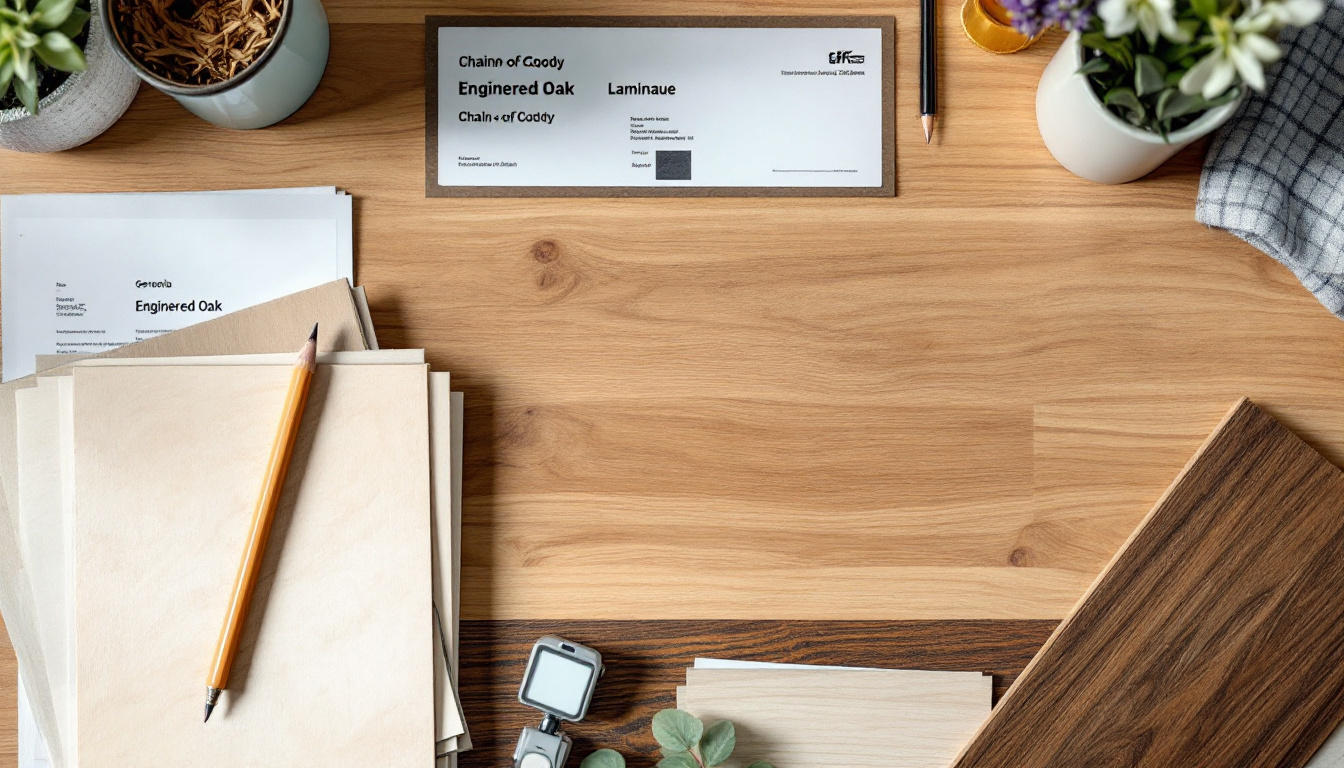
Wood can be renewable when forests are responsibly managed, but a flooring product is more than its visible timber. Engineered flooring includes core layers, adhesives and finish. Laminate combines a wear surface, decorative layer, wood-fibre core and balancing layer. Installation may add underlay, adhesive, trims and vapour-control materials.
This does not make composite flooring automatically bad. Efficient use of wood fibre can produce stable, durable boards and make use of material that would not become a solid plank. The honest comparison accounts for every significant layer and asks what each one contributes to performance, emissions and end-of-life options.
Be suspicious of single-attribute marketing. A rapidly renewable face material does not settle the adhesive question. Recycled content does not prove low emissions. A natural-oil finish does not prove responsible forestry. Environmental performance is a bundle of evidence, not a winning adjective.
Check 4: ask for indoor-emissions evidence
Flooring covers a large indoor surface, so emissions evidence belongs in the buying decision. Composite wood products, coatings and adhesives may release volatile compounds. Ask which current test or classification applies to the exact board and, where adhesive is required, to the installation system.
A “low-VOC” statement without a named standard, result, date or product reference is hard to evaluate. Request the technical data sheet or test report. Confirm whether it covers the finished product sold in New Zealand rather than a similar range from another market. If the report cannot be matched to the product code, treat it as background rather than proof.
Low emissions and low odour are not the same. A product may have little smell while still requiring formal emissions evidence, and a new material may have a temporary odour without failing its standard. Ventilation during installation remains sensible, but an open window is not a substitute for selecting documented products.
Check 5: put durability ahead of trend language
Service life is one of the most practical environmental levers available to a homeowner. Manufacturing, freight, packaging, removal and replacement all happen again when a floor fails early or is discarded because the colour was chosen for a short-lived trend.
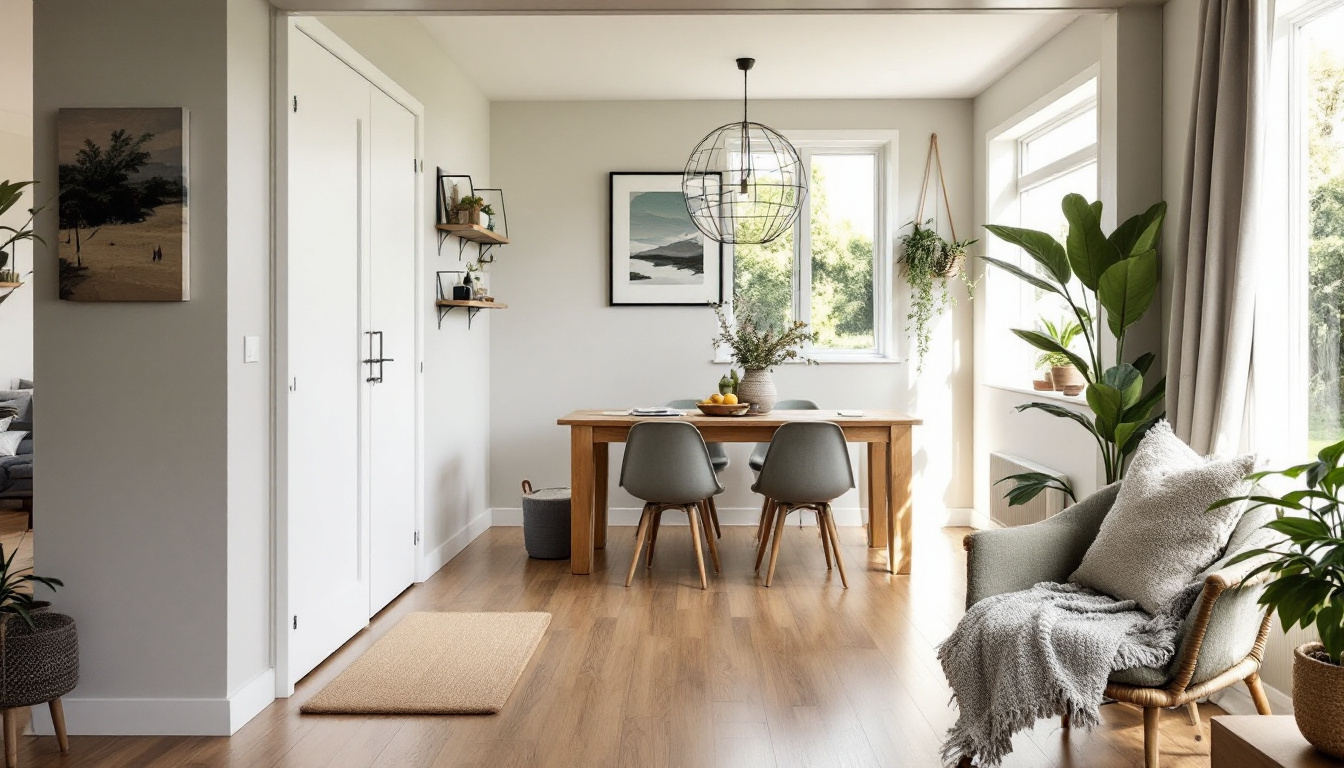
Durability begins with suitability. A beautiful real-wood floor in a room with unresolved moisture is not a responsible choice. A low-cost laminate installed over an uneven substrate may move and damage its joints. A tough surface in the wrong colour can still be replaced prematurely because the owner dislikes it. Product, room, substrate and design longevity work together.
Choose a visual that can live with the rest of the home. View several full boards in daylight and evening light. Ask how texture, sheen and colour show dust, scratches and fading. A forgiving finish that ages acceptably may stay in place longer than a pristine-looking sample that proves demanding in daily life.
Check 6: design the installation to reduce waste
The product choice is only part of the material footprint. Accurate measuring reduces over-ordering while still allowing for cuts, layout and a sensible quantity of spare boards. A complicated diagonal pattern or many small rooms can increase cutting waste. The quote should explain the allowance rather than hiding it.
Subfloor preparation can prevent failure and wasted replacement. Check flatness, soundness and moisture using the methods required by the flooring system. Resolve leaks and movement first. Covering a defect with new material is not efficiency; it delays the repair and risks throwing away the new floor as well.
Installation method affects future removal. A floating system may be easier to lift selectively, while a fully bonded floor can provide other performance advantages but be harder to separate. The correct choice depends on the product and building. Do not select an installation method solely for theoretical recyclability if it weakens performance in the actual room.
Check 7: investigate packaging, freight and manufacturing claims
Manufacturing efficiency, renewable energy, water management and packaging reduction can all matter, but corporate claims must be kept at the right level. An environmental management system shows that a manufacturer manages processes; it does not by itself prove that one floor has lower whole-life impact than every alternative.
Freight distance is visible and easy to criticise, yet it should not be isolated from durability, material efficiency and manufacturing evidence. A locally stocked product that fails quickly is not automatically better than a well-documented imported floor that performs for a long time. Ask for the complete picture and avoid fake precision when no verified life-cycle comparison exists.
Packaging is more concrete. Ask how boards are protected, whether damaged packs can be avoided through correct storage, and what cardboard or film can enter local recovery streams. On site, keep reusable full boards separate from contaminated offcuts and general waste.
Check 8: plan maintenance and repair before buying
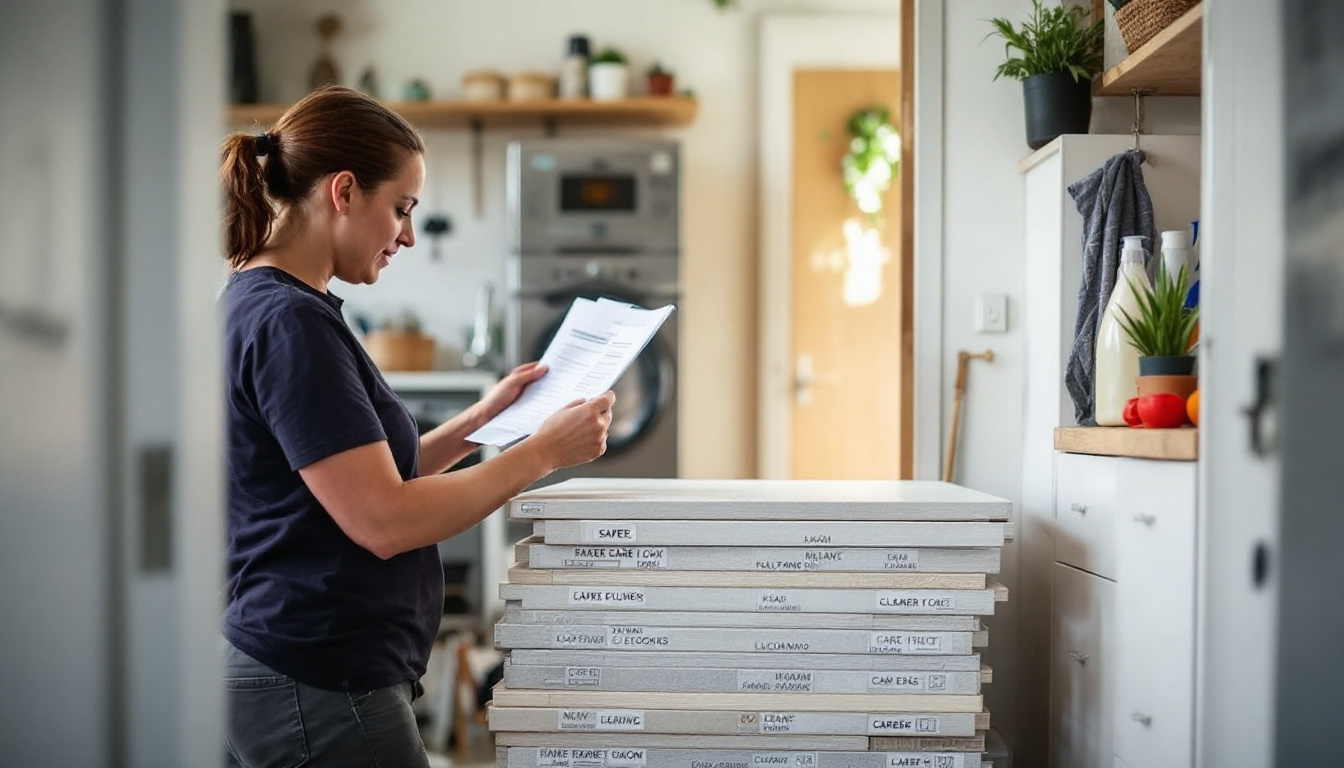
A floor that needs specialist products nobody can identify is difficult to maintain. Obtain the care guide before purchase. Check approved cleaners, moisture limits, furniture protection and whether localised board replacement or surface renovation is possible.
Engineered timber may offer repair or refinishing potential when its wear layer, profile and condition allow it. Laminate generally relies on plank replacement rather than sanding. Keep spare boards from the same batch in a dry, suitable location because colours and profiles change over time.
Routine care should be proportional. Entrance mats, regular grit removal, prompt spill cleanup and furniture pads can extend service without aggressive chemicals or excessive water. The environmental benefit is boring but real: prevent avoidable wear and keep the installed material useful.
Check 9: demand a realistic end-of-life answer
“Recyclable” is not enough. Ask whether an accessible New Zealand collection or processing route accepts the installed product, including coatings, adhesives and attached underlay. A material that can technically be recycled in a laboratory may still go to landfill when no local system receives it.
Reuse is often more immediate. Clean unopened packs, full boards and suitable reclaimed timber may have value for repair or another small project. Contaminated, swollen or adhesive-covered material is harder to recover. Plan deconstruction before demolition if reuse is a genuine objective.
Never invent an end-of-life benefit to close the sale. Record what is currently available and acknowledge uncertainty. Honest limitations are more useful than a green promise that disappears when the skip arrives.
How should laminate and engineered timber be compared?
Laminate can use wood fibre efficiently and provide a durable timber look without a thick hardwood surface. It may be a responsible choice when sourcing and emissions are documented, the room suits the product and the finish remains in use for a long time. Its repair pathway usually focuses on replacing boards rather than refinishing the surface. Our premium laminate boards are E1 rated for emissions, and our AquaREPEL laminate is CARB2 compliant.
Engineered timber uses a genuine timber wear layer over a multi-layer structure. It can provide real-wood character with improved dimensional stability compared with a similar solid plank. Depending on the product and remaining wear layer, repair or refinishing may be possible. It is not automatically sustainable merely because its surface is real wood. Our engineered oak range, from Oak Nature to Oak Espresso, uses a genuine European oak wear layer.
The responsible verdict comes from the exact products, not category stereotypes. Compare technical evidence, expected service in the room, installation requirements, care and realistic future options. If one product has better documentation and a clearer fit, that may be the stronger environmental choice even when another has greener branding.
A seven-line scorecard for the showroom
- Exact product and composition identified
- Timber or fibre source supported by current evidence
- Indoor-emissions claim tied to the product code
- Room and substrate suitability confirmed
- Expected maintenance and repair route understood
- Installation waste and spare-board plan agreed
- End-of-life claim matched to a realistic local route
A product does not need to be perfect in every line. It needs transparent trade-offs and a strong fit for the project. If two options appear equal, prefer the one with clearer evidence and the design you are more likely to retain.
Frequently asked questions
What is the most eco-friendly flooring in New Zealand?
There is no universal winner. Compare verified sourcing, composition, indoor emissions, suitability, service life, installation waste, repairability and realistic end-of-life routes for the exact products.
Is laminate flooring eco-friendly?
It can be a responsible option when its wood-fibre source and emissions are documented, it is durable in the intended room and it is maintained for a long service life. The category name alone proves nothing.
Is engineered wood more sustainable than laminate?
Not automatically. Engineered wood offers a genuine timber surface and may allow future renovation, while laminate can use wood fibre efficiently. Compare the exact sourcing, construction, durability and maintenance evidence.
Does low VOC mean a floor is safe and sustainable?
It addresses one part of the decision. Ask which test or classification applies to the exact product, then also assess sourcing, room suitability, durability, installation and end-of-life claims.
Should imported flooring be rejected because of freight?
Freight matters, but it should be assessed alongside manufacturing, material efficiency, documentation and expected service life. Do not claim one product is better without a verified whole-life comparison.
Turn the green claim into a document check. Review Power Dekor's sustainability approach and ask for evidence tied to the exact flooring range you want to use.