
Best Flooring for Wet Areas in NZ Homes: Kitchen, Bathroom, Entry and Laundry
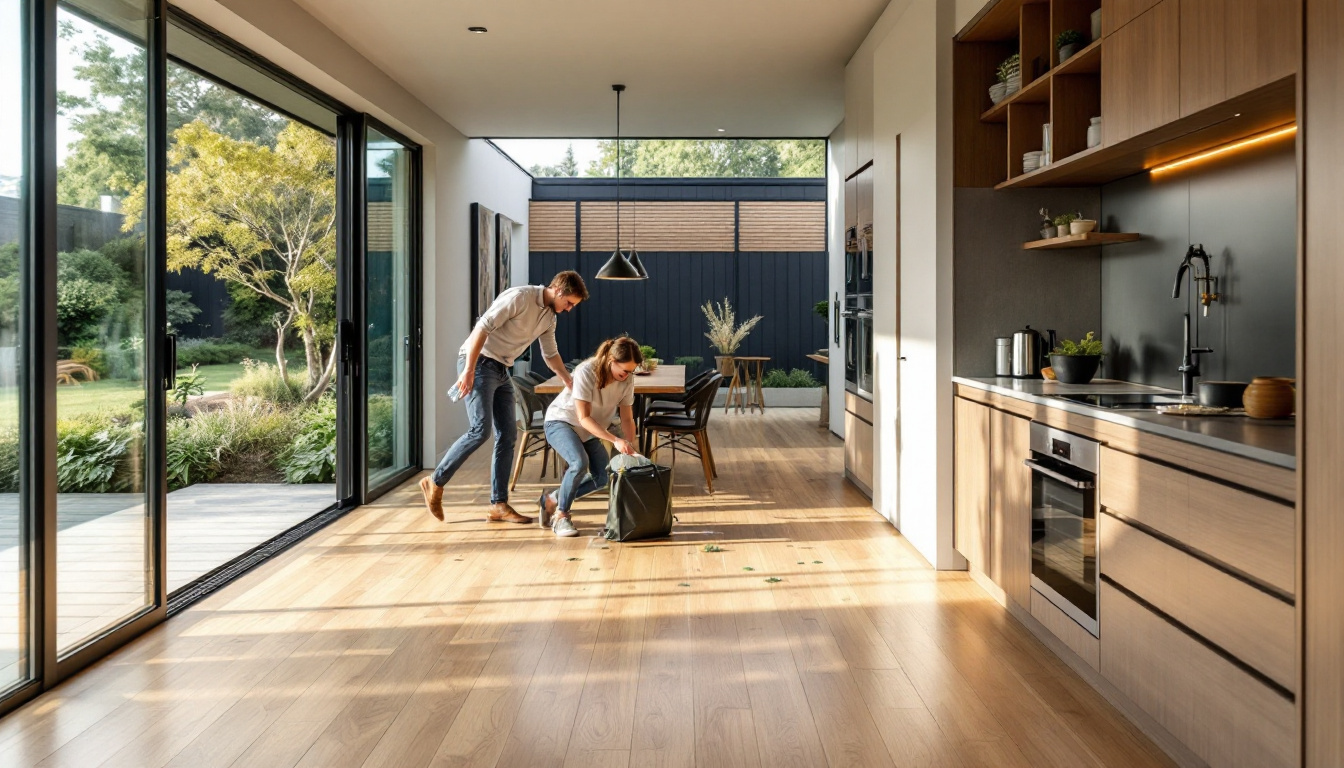
The best flooring for a wet area is not automatically the product with the loudest “waterproof” label. It is the system approved for the room's actual exposure, installed over a suitable substrate and detailed so water cannot reach vulnerable edges and junctions.
That distinction matters in New Zealand. Building Code clause E3 requires wet-area surfaces to be impervious and easily cleaned. MBIE guidance identifies laundries, bathrooms, kitchens and toilets as wet areas, but those rooms do not all receive water in the same way. A few wiped-up drops beside a sink are not equivalent to an open shower, overflowing appliance or persistently wet substrate.
Use this rule first:
For kitchens and entries exposed to ordinary tracked-in water or promptly cleaned spills, an approved water-resistant laminate can be a practical option. For shower zones, wet rooms, bathrooms with regular watersplash or spaces requiring a compliant membrane system, choose and document a complete wet-area system with the designer, supplier and installer. Do not treat click laminate as a shower floor.
Choosing flooring for a kitchen, entry or laundry? Review AquaREPEL Water-Resistant Laminate Flooring and ask Power Dekor to confirm whether the exact room and installation details are suitable.
Step 1: classify the water exposure before comparing looks
Most selection mistakes start with a room label. “It is for a bathroom” says less than these questions:
- Is there a shower, bath, basin, toilet, sink or water-connected appliance?
- Can water land directly on the floor during normal use?
- Could an appliance or fitting release a larger volume of water?
- Is the area expected to dry quickly, or does moisture sit beneath mats and cabinetry?
- Are there floor wastes, membranes, falls or consent documents that govern the system?
- What does the exact flooring manufacturer's installation and warranty documentation permit?
Classify the room into one of three practical exposure bands.
Band 1: incidental moisture
Examples include wet shoes at an entry, a tipped drink or small cooking splash that is cleaned promptly. The floor needs sensible moisture resistance and maintainable joints, but it is not expected to behave as a tank.
Band 2: repeated splash or appliance risk
Examples include the area beside a kitchen sink, dishwasher, washing machine or enclosed bathroom fixture. Product approval, edge sealing, transitions, substrate protection and rapid cleanup become more important. A leak can travel under a floating floor even when the plank surface looks intact.
Band 3: direct and persistent wetting
Examples include an open shower, wet-room floor, direct shower spray or a system designed to drain water across the floor. This is waterproofing territory. It requires a compliant surface and, where applicable, an internal wet-area membrane system and correctly designed junctions. Water-resistant laminate should not be sold as the shortcut.
Step 2: understand what New Zealand compliance changes
NZ Building Code clause E3 addresses internal moisture. MBIE states that surfaces in wet areas must be impervious and easily cleaned, with provisions addressing fungal growth, excessive moisture, overflow and watersplash.
The current E3/AS1 Acceptable Solution is one pathway to demonstrate compliance. MBIE's January 2026 guidance notes that timber and timber-based flooring was removed from E3/AS1 in 2020 and is now considered an Alternative Solution for E3 compliance. Laminate normally has a wood-fibre core, so a manufacturer's moisture claim alone is not a substitute for checking the compliance pathway where building work is involved.
This does not mean every kitchen floor replacement needs a dramatic building project. It means homeowners, designers and installers should stop treating “waterproof” as a universal technical specification. For consented work or a room with sanitary fixtures, confirm the proposed assembly with the responsible designer or building consent authority. Product marketing cannot approve building work.
E3/AS2 addresses internal wet-area membrane systems by referencing the Waterproofing Membrane Association code of practice. Shower floors and true wet rooms should be designed as systems: substrate, falls, membrane, penetrations, junctions and finish all have to work together.
Step 3: choose by room
Kitchen: water-resistant laminate can make sense
A kitchen usually combines frequent foot traffic with localised spills. A suitable water-resistant laminate offers a warm wood look and a comfortable surface for an open-plan kitchen and living zone. AquaREPEL is a 12 mm water-resistant laminate promoted for daily spills and wet mopping, with Power Dekor stating up to 24-hour spill resistance. The range runs from cool greys such as Silver Grey Oak to honey tones such as Amber Grain Oak.
That performance claim must be read with the installation and warranty conditions. It does not turn the floor into a drain pan. Wipe spills promptly, prevent leaks, detail edges and penetrations correctly, and avoid allowing water to migrate beneath the floating floor.
Choose laminate in a kitchen when:
- The exact product documentation permits the application
- The substrate is dry, sound, clean and within flatness requirements
- Dishwasher, fridge and sink connections are maintained
- Perimeters, transitions and fixed cabinetry are detailed correctly
- Occupants will clean spills rather than leave pooled water
Choose tile, sheet vinyl or an appropriately specified resilient system when direct or repeated wetting is more likely, or when the compliance and maintenance plan favours an impervious continuous finish.
Entry: manage water and grit together
An entry receives rain from shoes, grit, sand and concentrated wear. The floor must resist abrasion as well as moisture. A water-resistant laminate may suit an internal entry when wet footwear is managed with an effective matting zone and pooled water is removed.
Check the exterior threshold first. Water entering beneath a door, leaking through a slider or rising from a damp substrate is a building defect, not a flooring-performance test. Fix the source before installing a new finish.
Use a large breathable mat that traps dirt without keeping the floor wet. Avoid rubber or non-breathable backings unless the flooring care instructions approve them. Lift mats periodically and clean grit before it scratches the surface.
Laundry: appliance risk changes the answer
A laundry may be dry almost every day and then receive a large leak from a hose or appliance. That low-frequency, high-consequence risk separates it from an entry splash.
AquaREPEL may be considered only if the exact application, compliance pathway and installation details are approved. The floor still needs prompt leak response. A floating laminate surface is not a substitute for overflow provisions, a membrane, a floor waste or appliance maintenance.
Before choosing, check:
- Washing-machine taps, hoses and connections are accessible and maintained
- The appliance can be moved without destroying the floating-floor edge detail
- Any floor waste and required falls remain functional
- Perimeters and penetrations follow the specified system
- The substrate has no historic leak damage
- The product warranty covers the proposed room and events being discussed
Where the laundry regularly gets wet, or where containment and easy recovery from a leak dominate the decision, sheet vinyl, tile or another documented wet-area system may be the stronger choice.
Bathroom: separate enclosed splash from shower-floor exposure
Bathrooms are where loose language causes the most risk. An enclosed shower can reduce water reaching the main bathroom floor, but water still appears around doors, bath edges and basins. An open shower or wet room deliberately exposes the floor to water and drainage.
Do not install water-resistant laminate inside a shower or use it as the waterproof finish for a wet-room floor. For a bathroom outside the shower enclosure, suitability still depends on the exact product approval, E3 compliance pathway, substrate, junctions and maintenance plan. Get written confirmation rather than relying on a salesperson's generic statement.
Tile over a correctly designed membrane is common because it can form part of a documented wet-area assembly, but tile and grout alone are not the membrane. Sheet vinyl with correctly formed and sealed junctions can also provide an impervious, easily cleaned finish where specified. Hybrid or rigid-core products may tolerate plank wetting better than wood-core laminate, yet water can still reach the substrate at edges or penetrations. “Waterproof plank” does not mean “waterproof room”.
Step 4: compare flooring types without pretending one wins everywhere
Water-resistant laminate
Best fit: dry living areas connected to kitchens, internal entries and selected splash-prone rooms where the exact product and system are approved.
Strengths include realistic timber visuals, warmth underfoot, scratch resistance and continuity through open-plan areas. Limits include a wood-based core, dependence on joints and perimeter detailing, and risk when water gets beneath the floating assembly. AquaREPEL's stated spill performance is not permission for shower or wet-room use.
Hybrid or rigid-core plank
Best fit: rooms needing a timber-look resilient plank with better tolerance of plank-level moisture than conventional wood-core laminate, subject to the product's room approvals.
Its core may not swell like wood fibre, but the substrate, adhesive if used, perimeter and penetrations remain vulnerable. Check dimensional stability, acoustic requirements, direct sunlight limitations and bathroom exclusions. The word “hybrid” does not define one universal specification.
Sheet vinyl
Best fit: practical wet-area applications where a continuous, cleanable surface and formed junctions are important.
Sheet width can reduce joints, and correctly detailed coving or sealing can support an impervious system. Installation quality and substrate preparation matter because imperfections may telegraph through the finish. Distinguish sheet vinyl from click vinyl planks, which introduce more joints.
Tile
Best fit: bathrooms, showers and areas where a correctly designed tiled wet-area system is appropriate.
Tile is durable and easy to clean, but it feels harder and colder, can become slippery depending on surface selection, and relies on correct substrate, membrane and junction design. Grout is not a magical waterproof barrier. Repairs can also be disruptive if matching tiles are unavailable.
Engineered timber
Best fit: dry living spaces where genuine wood is the priority. It is not the default recommendation for direct wetting. MBIE's guidance makes the compliance issue explicit: timber and timber-based flooring in wet areas sit outside the E3/AS1 Acceptable Solution and require an Alternative Solution where used to demonstrate compliance.
Step 5: audit the product claim and warranty
Before buying any flooring marketed as waterproof or water-resistant, ask for documents covering the exact product code. Then answer these questions:
- Does the claim refer to surface spills, submerged samples, joints or the complete installed room?
- How long may water remain, and what cleanup is required?
- Are bathrooms, laundries, kitchens or commercial areas included or excluded?
- Must edges, doorways, pipes or perimeters use specified sealants or accessories?
- What underlay, vapour control and substrate conditions apply?
- Are appliance leaks, flooding, hydrostatic moisture or water beneath the floor excluded?
- Does DIY installation alter coverage?
A warranty is a conditional contract, not a substitute for room suitability. Keep the product code, batch details, installation instructions, moisture records and invoice. Photograph substrate checks and edge details before they disappear beneath the finished floor.
Step 6: inspect the substrate and water sources
The best surface product can still fail over a damp or damaged substrate. Power Dekor's installation instructions require the subfloor to be dry, sound, flat and clean. That is especially important in moisture-prone rooms.
Investigate staining, musty odours, swollen skirting, loose tiles and historic appliance leaks. On concrete, use the moisture-testing method required by the flooring system. On timber, check for decay, movement and plumbing damage. Do not seal an active leak beneath a new floor.
Also inspect the source side:
- Shower screens, bath edges and basin seals
- Dishwasher and washing-machine hoses
- Fridge water connections
- Exterior door seals and threshold drainage
- Toilet and pipe penetrations
- Ventilation and persistent condensation
Flooring selection is the last line of defence. Good plumbing, containment, ventilation and maintenance prevent the event in the first place.
A simple room decision tree
Does water intentionally flow across the floor or drain from it? If yes, specify a compliant wet-area or shower system. Do not choose laminate.
Does the room contain a sanitary fixture or water-connected appliance? If yes, identify the E3 requirements, overflow risk and manufacturer's room approval before selecting the finish.
Is exposure limited to tracked-in water and promptly cleaned household spills? If yes, a suitable water-resistant laminate may be considered, provided the substrate and detailing comply with the product instructions.
Is there an unresolved leak, damp slab or damaged substrate? If yes, stop. Diagnose and repair it before flooring installation.
Can the supplier and installer confirm the complete system in writing? If no, choose a system with clearer evidence. Ambiguous moisture claims are not worth gambling a finished renovation on.
Final checklist before ordering
- Room and exposure band documented
- Exact product code approved for the proposed application
- Compliance pathway confirmed where relevant
- Subfloor moisture, soundness and flatness checked
- Underlay, membrane or vapour-control requirements named
- Perimeters, penetrations, thresholds and transitions detailed
- Appliance leak and maintenance plan understood
- Installation and warranty documents retained
- Spare material quantity agreed
- Quote states inclusions, exclusions and responsibility for preparation
The best wet-area floor is the one whose limitations match the room. In a kitchen or internal entry, that may be a well-specified water-resistant laminate. In a shower or true wet room, it is a complete compliant waterproofing system. Blurring those categories sells more boards today and creates expensive failures tomorrow.
Get the room classification right before choosing the décor. Explore AquaREPEL Water-Resistant Laminate Flooring and ask Power Dekor Floors to assess your kitchen, entry or laundry application. For bathrooms and shower areas, request written confirmation of the complete specified system.
Frequently asked questions
Can water-resistant laminate be installed in a bathroom in NZ?
Not as a blanket rule. It must not be used as a shower floor or assumed to create a waterproof room. Suitability outside an enclosed shower depends on the exact product approval, E3 compliance pathway, substrate, junction detailing and manufacturer's instructions. Obtain written confirmation for the proposed bathroom.
Is AquaREPEL laminate waterproof?
Power Dekor describes AquaREPEL as a 12 mm water-resistant laminate with up to 24-hour spill resistance. Treat that as a conditional surface-spill performance claim, not permission for flooding, standing water, open showers or wet rooms. Follow the current installation, care and warranty documents.
What is the best flooring for a laundry?
Choose by leak risk and the required flooring system. Sheet vinyl, correctly specified tile systems and some approved resilient products may suit higher-moisture laundries. Water-resistant laminate may be considered only where the exact product, compliance pathway and detailing permit it. No surface replaces appliance maintenance or overflow provisions.
Are tiles waterproof without a membrane?
Do not assume so. A compliant bathroom or shower is a system that can include the substrate, falls, membrane, sealed penetrations, junctions, adhesive, tile and grout. Tile and grout alone do not make every assembly waterproof.
Can waterproof planks protect a damp concrete slab?
No. A moisture-tolerant plank does not repair an active moisture source or protect every component above the slab. Test and address the substrate according to the flooring system before installation.