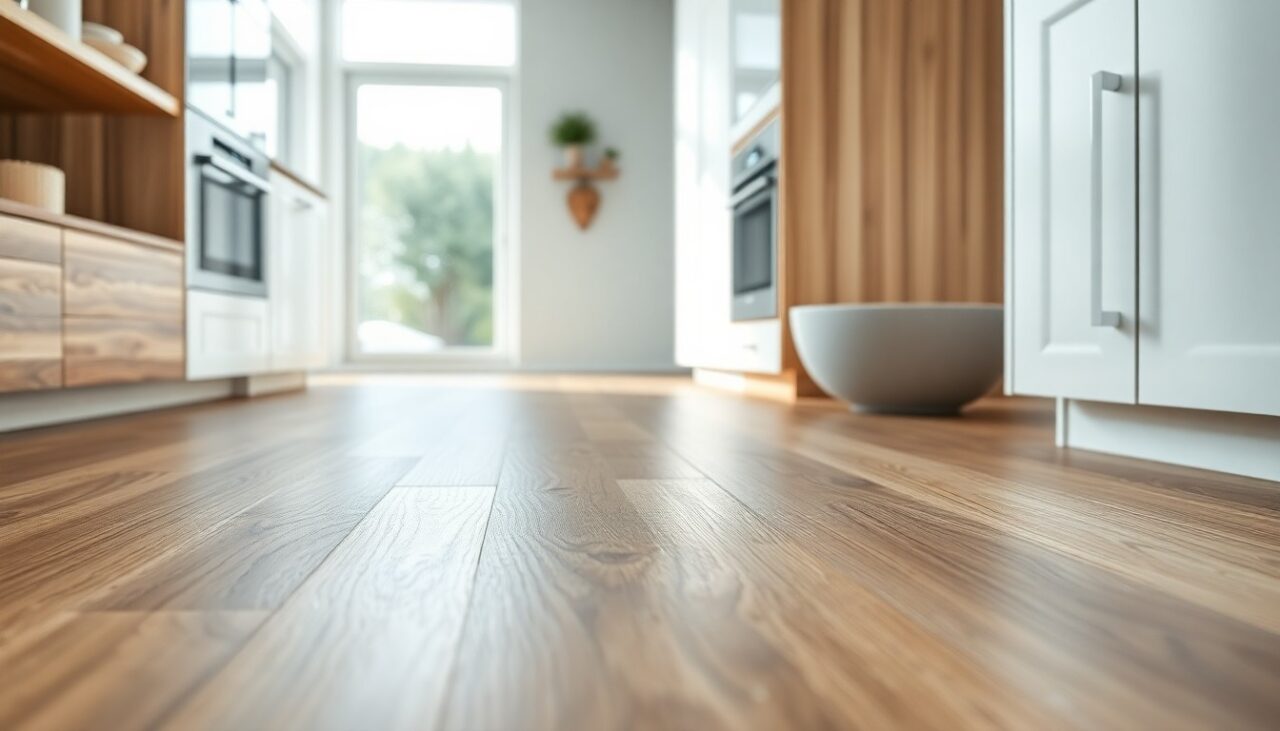
Kitchens, bathrooms, laundries and entryways are the hardest-working surfaces in any Kiwi home. They face splashes, spills, wet shoes and steam, so the flooring you choose there has to handle moisture without warping or staining. Four options dominate the conversation: waterproof laminate, vinyl, hybrid and tiles. This guide puts waterproof laminate flooring at the centre and compares it against the alternatives, so you can see where each one earns its place and which suits your rooms best.
If you want a hand matching a floor to a specific room, you can contact the Power Dekor team for advice before you decide.
What makes laminate “waterproof”?
Standard laminate uses a fibreboard core that can swell if water sits in the seams. Waterproof and water-resistant laminate improve on this with tighter locking joints, sealed edges and treated cores that hold off moisture for a defined period. Power Dekor’s AquaREPEL technology, for example, is built to resist surface water for up to 24 hours, which gives you time to wipe up spills before they reach the core. If you want the technical detail behind that, our AquaREPEL deep dive explains how the layers work together.
It is worth knowing the difference between the labels, since “waterproof” and “water-resistant” are not interchangeable. We break that down in our guide to waterproof and water-resistant laminate.
- The core and the locking joints are what hold moisture out.
- AquaREPEL laminate resists surface water for up to 24 hours.
- “Waterproof” and “water-resistant” describe different levels of protection.
Durability: what AC ratings tell you
Laminate is graded for abrasion resistance using an AC rating, which runs from lighter residential use up to heavy commercial use. For a family home, a mid to high residential rating handles everyday foot traffic, pets and furniture comfortably. The rating matters in wet areas too, because kitchens and entryways tend to see both moisture and the most foot traffic in the house. When you compare products, check the AC rating alongside the moisture protection rather than looking at either on its own.
- AC rating measures resistance to wear and scratching.
- A mid to high residential rating suits most NZ homes.
- Weigh durability and moisture protection together.
Waterproof laminate vs vinyl
Vinyl planks are fully synthetic and naturally resist water, which makes them a common pick for bathrooms. Their strength is moisture handling; their trade-off is feel and finish. Waterproof laminate tends to give a crisper, more realistic timber look and a firmer, more solid step underfoot, while still standing up to everyday spills. If realistic wood appearance ranks high on your list, laminate often has the edge. If a room is regularly soaked, vinyl’s full waterproofing can be the safer bet.
- Vinyl wins on full water immersion resistance.
- Laminate wins on timber realism and underfoot firmness.
- Choose by how wet the room really gets.
Waterproof laminate vs hybrid
Hybrid flooring blends features of laminate and vinyl over a rigid core, and it is genuinely waterproof. It performs strongly in wet rooms, though it usually sits at a higher price point. Waterproof laminate competes well on value and on surface realism, and for most living-adjacent spaces such as open-plan kitchens it covers the same needs at a friendlier cost. Hybrid makes more sense when you need full submersion resistance in a heavy-use bathroom.
- Hybrid is fully waterproof but costs more.
- Laminate offers strong value for kitchens and living areas.
- Reserve hybrid for the wettest, busiest rooms.
Waterproof laminate vs tiles
Ceramic and porcelain tiles are the traditional wet-area choice and handle standing water without issue. The downsides are comfort and installation: tiles feel cold and hard underfoot, and laying them is more labour-intensive. Waterproof laminate offers a warmer, softer surface that clicks together far more quickly, which keeps installation costs down. For a kitchen or laundry where you want the practicality of a wet-area floor without the chill of tile, laminate is a comfortable middle ground.
- Tiles handle standing water but feel cold and hard.
- Laminate is warmer underfoot and faster to install.
- Laminate suits kitchens and laundries that are not constantly wet.
Quick comparison
| Factor | Waterproof laminate | Vinyl | Hybrid | Tiles |
|---|---|---|---|---|
| Timber realism | High | Moderate | Moderate to high | Low |
| Moisture handling | Strong, time-limited | Full | Full | Full |
| Underfoot feel | Firm and warm | Softer | Firm | Hard and cold |
| Installation speed | Fast click system | Fast | Fast | Slower, labour-heavy |
| Typical supply cost | Mid-range value | Budget to mid | Higher | Higher with labour |
Installing flooring in wet areas
Whatever surface you choose, the way it is installed in a wet area is what keeps moisture out over the long term. A click-lock floating laminate needs an expansion gap around the edges so the floor can move without buckling, and that gap is then concealed by skirting or trim. In genuinely wet zones, the perimeter and any fixtures are usually sealed so water cannot track underneath. The subfloor needs to be dry and level first, since trapped moisture below the floor causes problems no surface can fix. New Zealand’s Building Code sets out the requirements for internal moisture, and the Ministry of Business, Innovation and Employment explains them under its internal moisture provisions, which are worth reading before any wet-area job.
- Leave an expansion gap around floating laminate.
- Seal the perimeter and fixtures in genuinely wet rooms.
- Start with a dry, level subfloor.
Underlay and comfort underfoot
The layer beneath a floating laminate floor does more than you might expect. A quality underlay smooths minor subfloor imperfections, softens the step and cuts the hollow sound that footsteps can make on a hard surface. In wet areas and over concrete, a moisture barrier is often built into the underlay or laid separately to stop dampness rising into the boards. Some laminate products arrive with an attached underlay, while others let you choose, so check what is included before you budget. For a wet zone, pairing the right floor with the right underlay is part of getting a result that lasts.
- Underlay improves comfort and reduces footstep noise.
- A moisture barrier matters over concrete and in wet areas.
- Check whether underlay is attached or bought separately.
Maintenance over the years
All four options are easy to live with, but the care differs slightly. Laminate and vinyl wipe clean with a barely damp mop and prefer that you avoid soaking the floor. Hybrid is similarly low-fuss. Tiles handle wet cleaning freely, though the grout lines need occasional attention to stay clean and sealed. Across the board, sweeping up grit and wiping spills promptly does most of the work in keeping a wet-area floor looking good.
- Laminate, vinyl and hybrid clean with a barely damp mop.
- Tile grout needs occasional cleaning and resealing.
- Prompt spill wiping protects every surface type.
Lifespan and budget
Each option spans a range depending on quality, but the broad picture helps with planning. Waterproof laminate offers a strong balance of lifespan and value for the price. Vinyl is often the lightest on the wallet up front. Hybrid sits higher on cost but rewards you with full waterproofing. Tiles can last the longest of all, though the higher installation labour pushes the total project cost up. When you compare quotes, look at the installed cost rather than the supply price alone, since the speed of a click-lock laminate can change the final figure noticeably.
- Laminate balances lifespan and cost well.
- Vinyl is usually the cheapest to buy.
- Compare installed cost, not just supply price.
When to choose waterproof laminate
Waterproof laminate is a strong fit when you want a realistic timber look, a warm and solid feel, fast installation and reliable protection against everyday spills, all at sensible cost. That covers a large share of NZ kitchens, laundries, entryways and open-plan living spaces. For rooms that see standing water for long stretches, such as a main family bathroom, pair your decision with our guide to the best flooring for wet areas in NZ homes to confirm the right product for each zone.
- Pick laminate for realism, warmth, value and fast fitting.
- It suits kitchens, laundries, entryways and living spaces.
- Reassess for rooms with frequent standing water.
Next steps
If waterproof laminate sounds like the right balance for your home, browse the water-resistant laminate range or take a closer look at the AquaREPEL waterproof laminate flooring collection from Power Dekor. Request a sample to see the finish in your own light, or contact our team for a recommendation tailored to your rooms.
Frequently asked questions
Is waterproof laminate flooring fully waterproof?
It resists surface water for a defined period rather than indefinitely. Power Dekor’s AquaREPEL laminate is designed to hold off water for up to 24 hours, which gives you ample time to clean up spills before they reach the core.
Is waterproof laminate good for bathrooms?
It suits powder rooms and laundries well. For a main bathroom that regularly sees standing water, a fully waterproof option such as hybrid or tile may be more appropriate.
Does waterproof laminate look like real wood?
Yes. Modern laminate uses high-resolution timber visuals and textured surfaces, and it is often rated highly for realism against vinyl and hybrid alternatives.
Is waterproof laminate cheaper than tiles?
Once installation is factored in, laminate is frequently the more economical choice, since its click system installs faster than tiling and needs less labour.
What AC rating should I look for in a wet area?
A mid to high residential rating handles the foot traffic of a kitchen or entryway comfortably. Check the AC rating together with the moisture protection so the floor copes with both wear and spills.