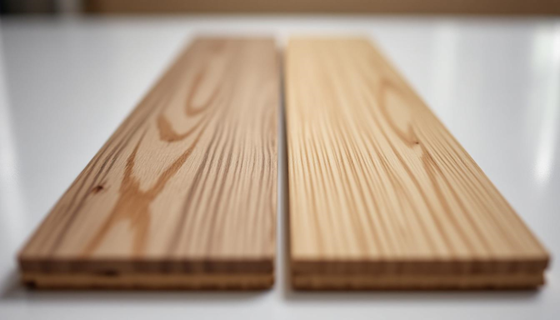
Choosing between engineered wood and solid timber flooring is one of the most common decisions NZ homeowners face — and one of the most misunderstood. Both look beautiful. Both feel premium underfoot. But they behave very differently in New Zealand conditions, and picking the wrong one for your space can cost you thousands down the track.
This guide cuts through the confusion with real comparisons on cost, durability, installation, and suitability for NZ’s climate.
Ready to see the options in person? Browse Power Dekor’s engineered hardwood range or contact us for a free sample.
Engineered Wood vs Solid Timber: Quick Comparison
| Factor | Engineered Wood | Solid Timber |
| Construction | Real wood veneer over plywood core | 100% solid wood throughout |
| Thickness | 12–20mm | 18–25mm |
| NZ climate suitability | Excellent — stable in humidity | Moderate — can cup or gap |
| Underfloor heating | Yes (most products) | Limited — check with supplier |
| Over concrete slab | Yes — glue or float | Rarely recommended |
| Refinishing | 1–3 times (veneer depth) | 5–7 times |
| Cost per sqm (supply) | $60–$130 | $90–$200+ |
| Installation cost (NZ) | $30–$60/sqm | $40–$70/sqm |
| Lifespan | 20–40 years | 50–100 years (with refinishing) |
What Is Engineered Wood Flooring?
Engineered wood flooring has a real hardwood veneer on top — typically 2–6mm thick — bonded to multiple layers of high-density plywood or HDF core. The cross-ply construction gives it structural stability that solid timber simply doesn’t have.
The result: a floor that looks and feels like solid timber but is far less prone to expanding and contracting with New Zealand’s humidity swings.
Key takeaways: – Engineered wood is real wood on top, not a photographic print like laminate – The plywood core makes it dimensionally stable in damp or humid conditions – Suitable for installation over concrete slabs and with underfloor heating — two situations where solid timber struggles
What Is Solid Timber Flooring?
Solid timber flooring is exactly what it sounds like: planks milled from a single piece of hardwood, top to bottom. It’s the most traditional flooring option and, with proper care, can last a lifetime.
The trade-off is movement. Solid timber absorbs and releases moisture continuously. In New Zealand, where coastal humidity, damp winters, and poorly insulated homes are common, this means cupping, gapping, and warping are real risks — especially in areas below grade or directly over concrete.
Key takeaways: – Solid timber offers the deepest refinishing potential — ideal for high-traffic family homes where longevity matters – Not suitable for direct installation over concrete without a vapour barrier and proper subfloor preparation – Requires acclimatisation of 5–14 days before installation in NZ conditions
NZ Climate: Why It Changes the Decision
New Zealand’s climate is the single biggest variable in this comparison. Humidity levels vary dramatically between regions:
- Auckland and Northland: High year-round humidity — engineered wood’s stability is a significant advantage
- Wellington: Humidity plus wind and cold — both products can work; engineered recommended for ground-floor installs
- Christchurch: Dry summers, cold winters — solid timber can perform well in well-insulated homes
- Coastal areas nationwide: Salt air and high humidity — engineered wood is the safer choice
Solid timber floors installed in high-humidity environments without proper acclimatisation and moisture management regularly develop cupping (edges rising) or gapping (planks shrinking apart). These are expensive problems to fix.
Key takeaways: – In humid NZ regions (Auckland, Northland, Waikato), engineered wood is the more reliable choice – Solid timber works well in drier, well-insulated South Island homes – Any ground-floor or below-grade installation should use engineered wood, not solid timber
Cost Comparison: What You’ll Actually Pay in NZ
Cost is rarely as simple as the sticker price per sqm. Installation, subfloor prep, and long-term maintenance all factor in.
Supply costs (per sqm, NZ 2026)
- Engineered wood: $60–$130/sqm (entry to premium)
- Solid timber: $90–$200+/sqm (standard to premium hardwood)
Installation costs (per sqm)
- Engineered wood: $30–$60/sqm (glue-down or floating)
- Solid timber: $40–$70/sqm (nail or glue-down; more labour-intensive)
Subfloor preparation
Both products require a flat, dry subfloor. Over concrete, engineered wood can often be installed directly with appropriate adhesive; solid timber usually requires a timber subfloor or battens, adding $15–$30/sqm.
Refinishing over time
Solid timber can be sanded and refinished 5–7 times over its life. Engineered wood with a 4mm+ wear layer can typically be refinished 1–3 times. For a 40-year horizon, the true cost difference narrows considerably.
Key takeaways: – Engineered wood is typically 20–40% cheaper to supply and install in most NZ scenarios – Solid timber may cost more upfront but offers more refinishing cycles over decades – Subfloor prep for solid timber over concrete can add significant cost
Installation: Which Is Easier?
Engineered wood offers more installation flexibility, which is one reason it’s become the dominant choice for NZ renovations.
Engineered wood installation methods: – Floating (click-lock system) — fastest, no adhesive required – Glue-down — most stable, recommended for high-traffic areas – Staple/nail-down — over timber subfloors
Solid timber installation methods: – Nail or staple-down — requires timber subfloor – Glue-down — possible over concrete with extensive prep and moisture barriers
For most NZ homes, engineered wood’s flexibility — particularly the ability to float over concrete slabs — significantly reduces installation complexity and cost. View Power Dekor’s engineered hardwood flooring range for options suited to NZ conditions.
Key takeaways: – Engineered wood can float, glue, or nail-down; solid timber is primarily nail or glue – Floating installation (engineered) is the fastest and most DIY-friendly option – Solid timber over concrete requires significant subfloor preparation
Maintenance & Longevity
Both floors need regular sweeping and occasional damp mopping with a pH-neutral cleaner. Neither should be exposed to standing water.
The key difference is refinishing:
- Solid timber can be heavily sanded and refinished repeatedly, removing deep scratches and stains and restoring the floor to near-original condition. With a 50–80 year lifespan when properly maintained, it’s genuinely a once-in-a-generation investment.
- Engineered wood can be lightly sanded and refinished 1–3 times depending on the veneer thickness. A quality engineered floor with a 4–6mm wear layer still offers 20–40 years of life before replacement is necessary.
For families with dogs or high foot traffic, engineered wood with a hard lacquer or UV-oil finish tends to show scratches less than softer solid timber species.
Key takeaways: – Solid timber offers superior refinishing potential — the right choice if you want a floor that lasts 50+ years – Engineered wood is more scratch-resistant (harder finishes available) and easier to maintain in active households – Both require the same routine maintenance: sweep regularly, damp mop with neutral cleaner, avoid standing water
Which Should You Choose?
Choose engineered wood if: – You’re installing over a concrete slab – Your home has underfloor heating – You’re in Auckland, Northland, or a coastal area – You want faster, lower-cost installation – Budget is under $150/sqm installed
Choose solid timber if: – You have a timber subfloor and want maximum longevity – You’re in a dry, well-insulated home (Christchurch, Central Otago) – You plan to stay in the home for 30+ years and want to refinish multiple times – You want the absolute premium feel and resale appeal
Both options look stunning. The difference is where and how they perform.
FAQs
Is engineered wood flooring real wood? Yes. The top layer is real hardwood veneer — the same species you’d find in solid timber. Only the core construction differs. From above, a quality engineered floor is indistinguishable from solid timber.
Can engineered wood flooring be refinished? Yes, 1–3 times depending on the wear layer thickness. A 4mm+ veneer gives you at least one full sand-and-refinish, which is enough for most homeowners over the floor’s life.
Which is better for dogs and kids? Engineered wood, particularly products with a hard-lacquer or aluminium oxide finish. The harder surface coating resists scratch marks from pet claws better than many solid timber species.
Does solid timber floor expand in NZ humidity? Yes. All solid timber moves with moisture. In high-humidity NZ regions, this can cause cupping (edges curling up) or gapping (planks shrinking apart) if the floor isn’t properly acclimatised and installed with adequate expansion gaps.
Can I install either floor over underfloor heating? Engineered wood is generally compatible with underfloor heating (check the manufacturer’s spec). Most solid timber is not recommended over in-slab heating due to excessive moisture-driven movement.
Next Step
Not sure which product suits your home? Power Dekor’s team can help you match the right floor to your subfloor, climate zone, and budget.
Contact us for a free consultation or explore the full engineered hardwood range to find your match.
All pricing reflects 2026 NZ market rates. Installation costs vary by region and subfloor condition.